
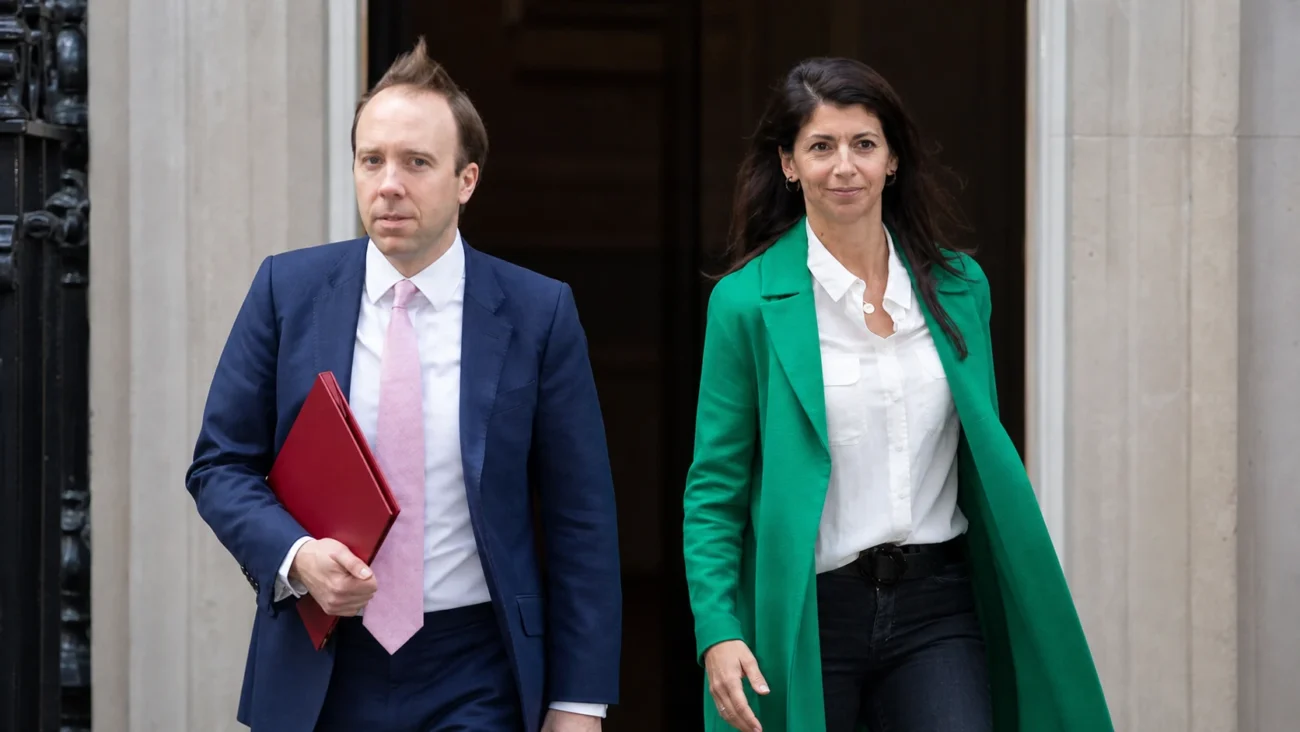
Gina Coladangelo is a British communications and marketing strategist whose career has included senior roles in consultancy, retail, government-related work and charitable governance. She currently works as a Senior Adviser at Coulson Partners, which describes her as having more than 25 years of experience across communications, marketing, business and consultancy.
She became much more widely known in 2021 when her relationship with then-health secretary Matt Hancock became public during the COVID-19 pandemic. At the time, she was serving as a non-executive board member at the Department of Health and Social Care. The episode brought scrutiny not only to their personal relationship but also to questions about the independence and appointment of non-executive directors in government.
A career built in communications and marketing
Long before becoming a figure in national political news, Coladangelo had established a career spanning public relations, corporate communications, marketing, public affairs and crisis management.

Her current professional biography at Coulson Partners describes experience in areas including digital marketing, brand development, PR and strategic communications. Before her present advisory work, she held senior positions at Oliver Bonas and Luther Pendragon.
At Oliver Bonas, the British lifestyle retailer, she served as Chief Marketing Officer. She was also a director and co-owner of Luther Pendragon, an issues-management consultancy.
Her professional background extended into healthcare communications as well. A government biography published during her time at the Department of Health and Social Care described work involving NHS trusts, healthcare agencies, professional bodies, patient groups and charities, alongside experience in the retail and environmental sectors.
She has also been involved in charitable organisations. Her government biography recorded earlier service as a trustee of Willow, while her more recent charitable work has centred on BeyondAutism.
From private-sector adviser to a role in government
Coladangelo became involved with the Department of Health and Social Care during the early months of the COVID-19 pandemic.
She initially worked within the department as an unpaid adviser. Parliamentary scrutiny published later confirmed that this advisory position came before her appointment as a paid non-executive board member.
Her formal term as a DHSC non-executive began on 1 September 2020.
Government non-executive directors are intended to bring external experience into departmental governance. Their responsibilities include challenging senior leadership, contributing to board and committee discussions and providing an outside perspective on how departments operate.
That distinction became significant in Coladangelo’s case because the role was intended to provide independent challenge rather than function simply as an extension of a minister’s personal team.
Official DHSC accounts show that her position carried an annual fee entitlement of £15,000. However, the same accounts record £4,000 as the amount received in 2021–22. That makes the commonly repeated description that she was simply “paid £15,000” incomplete.
Her longstanding connection with Matt Hancock
Coladangelo and Matt Hancock knew each other many years before they worked around the same government department.
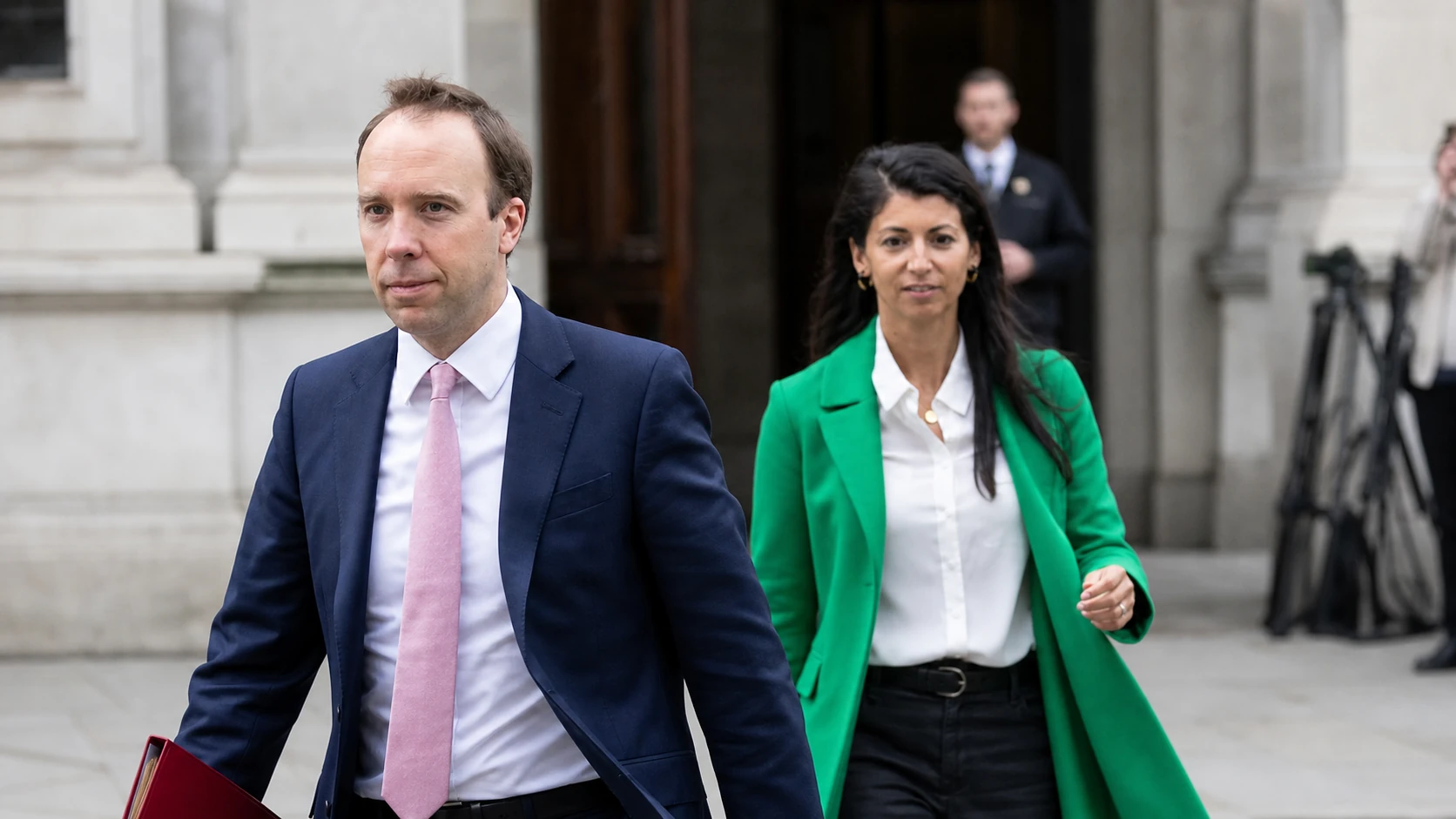
Contemporary reporting in 2021 said they had known one another since Oxford University and had both been involved with the university’s Oxygen FM student radio station.
Their relationship became a major public story in June 2021 after footage was published showing the pair embracing and kissing inside the Department of Health and Social Care while COVID-era social-distancing restrictions remained in force.
Hancock acknowledged breaching the guidance and resigned as health secretary on 26 June 2021.
Official DHSC records show that Coladangelo’s term as a non-executive board member also ended on 26 June.
The immediate political controversy centred on the relationship and the breach of social-distancing rules, but Coladangelo’s position inside the department also created a separate question: whether someone personally close to the health secretary could provide the independence expected from a government non-executive director.
Why the appointment drew wider scrutiny
The controversy surrounding Coladangelo’s government role continued after she left the department.
The Institute for Government argued in July 2021 that her relationship with Hancock, her earlier unpaid advisory role and her previous support for his Conservative leadership campaign made her poorly placed to provide the degree of independent challenge expected from a departmental non-executive.
That was an institutional assessment rather than a formal finding that she had illegally obtained the job.
The issue later featured in the House of Commons Public Administration and Constitutional Affairs Committee’s examination of non-executive directors in government. The committee considered the Hancock-Coladangelo episode while examining whether personal and political connections could weaken the independence expected from such appointments.
The distinction matters. The appointment was criticised on governance and transparency grounds, but the available official record does not establish that Coladangelo’s appointment was ruled unlawful or formally invalid.
The separate parliamentary-pass investigation
Another controversy concerned a parliamentary pass sponsored for Coladangelo by health minister Lord Bethell.
The matter was examined by the House of Lords Commissioner for Standards. In records relating to that investigation, Coladangelo appeared under her married surname, Gina Tress.
The Commissioner investigated whether the work she had performed was sufficient to justify the parliamentary pass. The final report concluded that she had genuinely undertaken qualifying research or secretarial work for Lord Bethell between March and December 2020.
The complaint against Bethell was therefore dismissed.
That finding should be kept separate from criticism surrounding Coladangelo’s DHSC appointment. Questions were raised about both matters, but the parliamentary-pass case resulted in an explicit clearing decision.
How government appointment rules later changed
The questions raised around departmental non-executive appointments became part of a wider debate about how such positions should be regulated.
The Institute for Government recommended in 2021 that appointments of departmental non-executives should come under the Commissioner for Public Appointments.
The system subsequently changed. An updated Order in Council in July 2023 brought 17 Civil Service departmental boards within the regulated public-appointments framework.
During a Public Accounts Committee hearing in March 2024, Cabinet Office officials pointed to that regulation as a significant change when MPs asked what had been done since the Hancock-Coladangelo episode.
It would be too strong to say that her case alone caused the reform. The more defensible conclusion is that it became one prominent example in a wider debate over how government non-executives should be selected and how their independence should be protected.
Her professional and charitable work now
Coladangelo has continued working in communications and strategic advisory roles since leaving government.
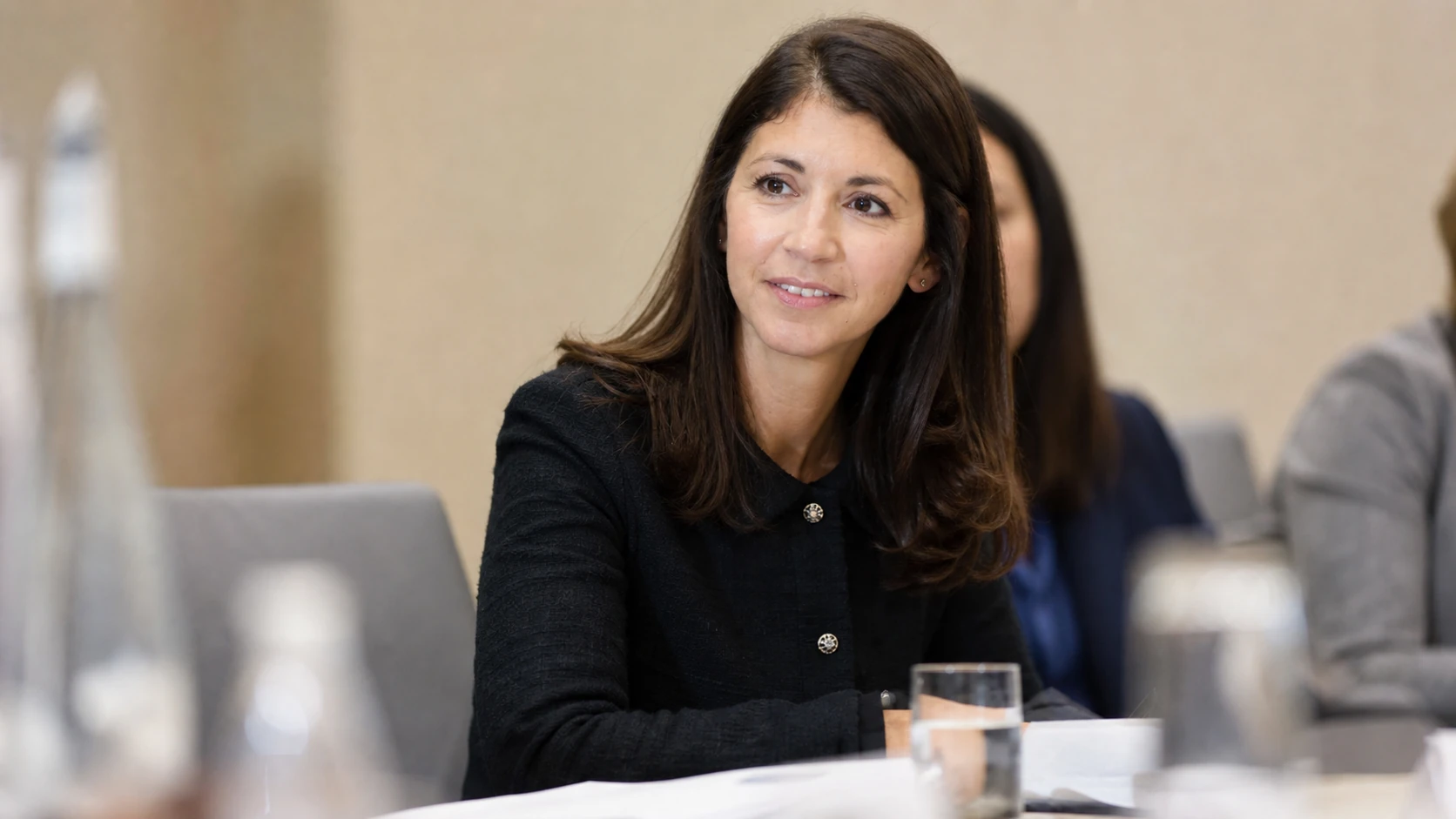
As of August 2026, Coulson Partners lists her as a Senior Adviser. Her profile there focuses on advising senior leaders and organisations on strategy, communications and campaign delivery.
She is also a trustee of BeyondAutism. The Charity Commission records her appointment as a trustee from 21 July 2024, while BeyondAutism says she had already been involved with its schools as a governor since 2020 and later became Chair of Governors.
BeyondAutism also states publicly that she has three children, although further private details about them are not necessary to understanding her public career.
Her earlier association with Oliver Bonas can sometimes create confusion because an older GOV.UK biography still describes that role in present tense. Her newer professional biography at Coulson Partners makes clear that Oliver Bonas was a previous senior position rather than her current employment.
What is known about her relationship status
Coladangelo and Hancock were publicly described as partners in reputable reporting in 2022 and again in 2023.
However, strong current evidence confirming the status of their relationship specifically as of August 2026 is limited. It is therefore safer to describe their relationship as publicly established after the events of 2021 and documented in subsequent years rather than to make an unsupported claim about their present private circumstances.
Coladangelo was married to Oliver Bonas founder Oliver Tress when her relationship with Hancock became public. Later reporting described the marriage as separated or estranged, but an authoritative public record confirming her current legal marital status was not established.
For the same reason, claims about an exact divorce date or present legal status should be treated cautiously.
Final thoughts
Gina Coladangelo’s public identity cannot be reduced to the political controversy that made her nationally recognisable. She had already spent decades working in communications, marketing and consultancy before entering the Department of Health and Social Care, and she has since returned to strategic advisory and charitable governance work.
The 2021 episode nevertheless remains central to understanding why she became a prominent public figure. Her relationship with Matt Hancock coincided with a government role that was supposed to provide independent challenge, turning a personal scandal into a broader debate about appointments, transparency and governance.
Her current public profile is therefore best understood through both sides of that record: a substantial professional career in communications and the exceptional scrutiny generated by her time inside government.
