
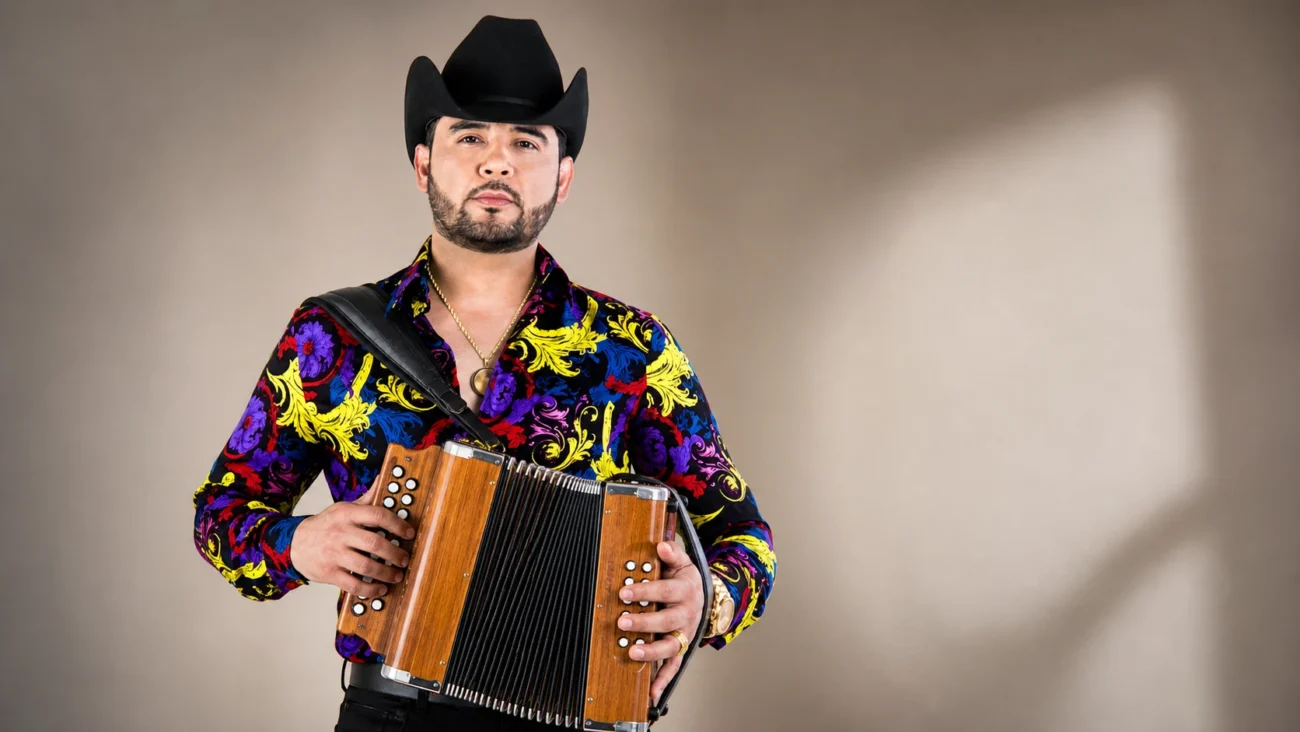
Darey Castro has spent more than two decades building, losing and rebuilding momentum in regional Mexican music. Best known as the singer, accordionist, songwriter and producer behind Los Dareyes de la Sierra, he first reached major U.S. Latin charts in the 2000s and later found a second audience through collaborations with Peso Pluma, Xavi, Tito Double P, Neton Vega and other artists tied to the current corridos movement.
His career has never followed a simple upward path. Castro survived a deadly 2004 attack that killed several fellow musicians, returned to recording, scored one of his biggest early hits with “Hasta el Día de Hoy,” earned a Latin Grammy nomination and then, years later, re-entered the center of regional Mexican music through projects such as Redención and SABIA. His exact age, relationship status and personal wealth remain less clear because he has kept much of his private life outside the public record.
Early Life and Family Background
Darey Castro’s full name is José Darey Castro Borbón. He is from Navojoa, Sonora, Mexico, a city in a state with deep musical connections to norteño, banda and sierreño traditions. His nationality is Mexican, and his public identity has remained closely tied to Sonora throughout his career.
Castro has said that music entered his life when he was young. His father gave him his first guitar when he was about 10 years old, although he did not immediately turn that childhood interest into a professional career. He returned seriously to music during his teenage years and gradually began developing the style that would later define Los Dareyes de la Sierra.
Very little dependable information has been published about his parents beyond that early musical influence. The names and occupations of his parents, the number of siblings he may have and other details about his family background are not widely confirmed in reputable sources. Castro has generally discussed his work more openly than his upbringing.
His education is also not clearly documented. There is no dependable public record establishing the schools he attended, whether he completed higher education or whether he received formal musical training. His career appears to have developed through practical performance experience rather than through a heavily documented academic route.
Darey Castro’s Age and Date of Birth
Castro’s exact date of birth remains uncertain. Some Mexican entertainment reporting has associated his birthday with April 17, but a reliable birth year has not been firmly established. Various biography websites publish different years, which makes a precise age difficult to verify.
Because of those inconsistencies, it is safer to say that Darey Castro’s exact age is not publicly confirmed as of August 2026. His professional timeline does establish that he has been active in music since at least the late 1990s and was already charting in the United States by the middle of the 2000s.
That distinction matters because online celebrity profiles often repeat one another until an unverified birth date begins to look established. In Castro’s case, the musical timeline is much stronger than the personal biographical record.
Early Career and the Road to Los Dareyes de la Sierra
Before Los Dareyes de la Sierra became his best-known professional identity, Castro was connected with earlier regional Mexican groups. Published accounts have linked him with Los Llegadores de Sonora and Los Alteños de la Sierra during the formative years of his career.
The exact sequence and dates vary slightly across biographies, but the broad story is consistent. Castro spent years performing northern Mexican music before developing the Dareyes de la Sierra name that later became closely associated with him personally.
A U.S. trademark record provides one of the clearest official links between Castro and the group. The trademark for LOS DAREYES DE LA SIERRA identifies José Darey Castro Borbón as the owner and lists first commercial use in 2005. The registration helps confirm that the Dareyes identity was not simply the name of a rotating band unrelated to him; Castro has long been its central creative and business figure.
Over time, Los Dareyes de la Sierra became less like a fixed lineup and more like a musical project built around Castro. Different musicians have worked with him, but his voice, accordion playing, songwriting and production have remained the most consistent elements.
The 2004 Attack and a Career-Changing Loss
One of the most serious events in Castro’s life came in 2004. He survived an armed attack in Chihuahua in which several musicians traveling with him were killed.
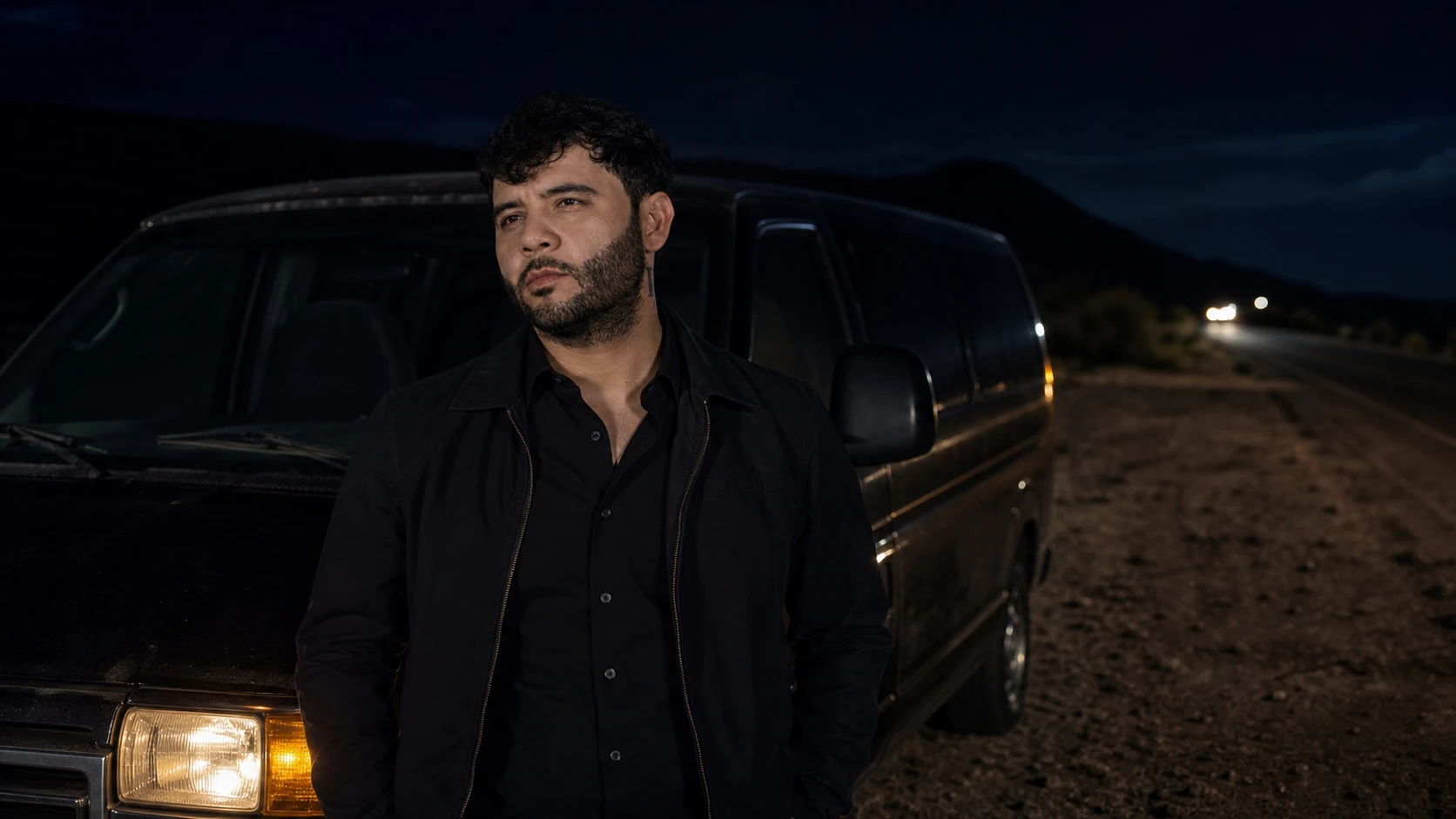
Mexican reporting has described the incident as occurring near Ciudad Cuauhtémoc and has stated that four musicians died. Castro survived physically, but later accounts have described the aftermath as an emotionally difficult period in which his future in music became uncertain.
The attack is often discussed in the context of violence that has affected parts of the regional Mexican music industry. Castro has recorded corridos involving organized crime, drugs, wealth and danger, but there is not enough dependable public evidence to state a proven motive for the attack or identify with certainty why the musicians were targeted.
What is clear is that Castro returned. Rather than ending his career after the deaths of his colleagues, he reorganized his musical work and continued recording under the Dareyes de la Sierra identity. That survival and reconstruction became one of the defining themes of his later career.
Career Breakthrough and “Hasta el Día de Hoy”
Dareyes de la Sierra began appearing on Billboard’s regional Mexican charts in 2005. “El Jabalí” reached the Regional Mexican Airplay chart, giving Castro a measurable U.S. radio presence years before the streaming era changed how regional Mexican artists reached international audiences.
His first major commercial peak arrived with “Hasta el Día de Hoy.” The song became a major regional Mexican radio hit in 2008, spending 11 weeks at No. 1 on Billboard’s Regional Mexican Airplay chart and reaching No. 3 on Hot Latin Songs.
That period produced several other strong chart performances. “Sufre” reached the upper portion of Regional Mexican Airplay, while “Enséñame a Olvidar” also became one of the group’s better-performing songs.
The albums were successful as well. Con Banda reached No. 3 on Billboard’s Regional Mexican Albums chart, and Una Copa Más also reached No. 3. Me Gusta Lo Bueno later reached the top five.
By the late 2000s, Castro had moved beyond being a regional performer with a local following. He had built a recognizable catalog, radio hits in the United States and a commercial presence across the broader regional Mexican market.
Latin Grammy Recognition
In 2009, Los Dareyes de la Sierra received a Latin Grammy nomination for Best Banda Album for Una Copa Más. The nomination is recorded in the official Latin Recording Academy database.
The group did not win the award, but the nomination remains one of the clearest formal honors in Castro’s career. It also came during the same period in which his albums and singles were reaching some of their strongest Billboard positions.
That recognition is sometimes overstated on secondary biography sites. Castro and Dareyes de la Sierra have a documented Latin Grammy nomination, but claims of multiple Latin Grammy victories are not supported by the official record.
A Style That Moved Beyond One Regional Mexican Format
Castro’s catalog has never stayed inside one narrow musical category. His earlier work moved between sierreño, norteño, banda arrangements, corridos and romantic songs, which gave him more flexibility than artists identified almost entirely with one format.
He also explored themes that later became more common in corridos tumbados. In 2007, for example, he recorded “Los En-Kush-ados,” part of his experimentation with marijuana-related corridos. Castro later reflected that audiences at the time were less accepting of that material than younger listeners became years later.
That history helped his eventual comeback feel less like an older singer imitating a younger trend. When corridos tumbados and adjacent styles began dominating streaming charts, Castro was able to work with younger artists without abandoning the harder-edged themes he had already used in his own music.
His voice also remained distinctive. Rather than trying to copy the lighter vocal styles of younger singers, he retained the rough, mature delivery associated with his earlier records.
The “Adiós Amor” Connection
Castro also has an interesting connection to Christian Nodal’s breakthrough hit “Adiós Amor.” He did not write the song; songwriter Salvador Garza is credited as its composer.
Castro had recorded the song before Nodal’s version became a major success. He later discussed how the composition circulated within regional Mexican music circles before reaching Nodal, who released the recording that ultimately turned it into a defining hit of his early career.
The story is useful because it shows how deeply Castro was connected to the professional regional Mexican network even during periods when he was receiving less mainstream attention. His career has included not only his own recordings but relationships with writers, producers and performers across several generations.
Peso Pluma, “VVS” and a New Generation of Listeners
Castro’s most important bridge to a younger audience came in 2023. Los Dareyes de la Sierra appeared with Peso Pluma and Edgardo Nuñez on “VVS,” a track from Peso Pluma’s album GÉNESIS.
The collaboration gave Dareyes de la Sierra its first appearance on the all-genre Billboard Hot 100, where “VVS” reached No. 54. That achievement came almost two decades after Castro’s first Billboard regional chart appearance.
The contrast was striking. Longtime listeners knew him from “Hasta el Día de Hoy” and his 2000s catalog, while a new generation encountered him beside one of the biggest artists produced by the corridos tumbados boom.
Castro also worked with Xavi on “Poco a Poco.” He shared songwriting credit on the track and appeared as a performer, strengthening his connection to another much younger regional Mexican star.
These collaborations did more than introduce his name to new listeners. They repositioned Castro as an active participant in the current movement rather than as a legacy artist making occasional nostalgic appearances.
Redención and the 2025 Comeback
The comeback became fully established in 2025 with the album Redención. Released through Double P Records, the label associated with Peso Pluma’s professional circle, the project brought Castro into direct collaboration with some of regional Mexican music’s most commercially visible younger performers.
The album featured Peso Pluma on “Supreme,” Tito Double P on “Vita Fer,” Neton Vega on “Boneless,” Gabito Ballesteros on “Te Engañé” and Luis R Conriquez on “Polvo de Hadas.” Later expanded material brought in additional collaborators.
Despite the number of guests, Castro remained more than a featured veteran. He continued writing and producing, preserving creative control over the project while adapting the production to the current sound of corridos.
“Vita Fer” became one of the album’s strongest songs, reaching No. 1 on Billboard’s Mexico Songs chart. “Frecuencia” also became a major streaming and chart success, reaching the top tier of the same chart and eventually accumulating hundreds of millions of streams.
The title Redención carried special weight in light of Castro’s history. After surviving the 2004 attack, navigating changing musical trends and spending years outside the center of the mainstream regional conversation, he had returned with one of the strongest commercial periods of his career.
Touring and Renewed Public Recognition
The Redención era also produced a major touring milestone. In 2025, Dareyes de la Sierra announced a 20-date U.S. tour that was promoted as the act’s first formal U.S. tour.
The itinerary included Los Angeles, Las Vegas, Chicago, Houston, Boston, Brooklyn, San Diego, Seattle and other markets. The tour gave Castro the opportunity to perform for both longtime fans and listeners who had discovered him through recent collaborations.
His live set represented two careers at once. Early songs such as “Hasta el Día de Hoy” connected with listeners who followed him in the 2000s, while newer material placed him firmly within the current regional Mexican streaming culture.
That generational overlap became one of the most distinctive features of his comeback.
SABIA and His Career in 2026
Castro followed Redención with SABIA, released in April 2026 through Double P Records. The 21-track project showed that the previous year’s success was not being treated as a one-album reunion with the mainstream.
Compared with Redención, SABIA placed more emphasis on Castro himself and relied less heavily on a long list of high-profile guests. The album continued working with modern corrido production while also moving through romantic material and some Caribbean-influenced sounds.
Tracks included “TRANKIS MORRIS,” “SAYKO,” “PARADISE,” “MATCHA,” “TETRICO,” “PASTA,” “PLAY MODE,” “AGUA Y JABON” and “ESPEJO.” Castro again appeared in writing and production credits, reinforcing the fact that his current career involves much more than fronting a live band.
By August 2026, Los Dareyes de la Sierra continued to command a large streaming audience. Monthly-listener totals on Spotify had climbed into the millions, while songs from the Redención period remained among the project’s most heavily played recordings.
Marriage, Children and Private Life
Castro has kept his family life largely private. Reliable public reporting does not clearly establish whether he is currently married, who his spouse or partner may be, or how many children he has.
Some biography websites publish specific relationship claims, but many do not provide dependable sourcing. Without direct statements, credible interviews or documented public records, those details should not be treated as confirmed.
The same privacy applies to much of his life outside music. Castro has appeared in interviews about his career, musical influences and past experiences, but he has not built a public identity around exposing his household or relatives to constant media attention.
That separation between public career and private life has remained consistent even during his recent rise in visibility.
Darey Castro’s Net Worth and Income Sources
Darey Castro’s net worth is not publicly confirmed. No reliable financial publication, legal filing or verified business record provides enough information to calculate his personal wealth with confidence.
His income likely comes from several music-related sources. These include live performances, streaming royalties, recorded music, songwriting, production work, publishing rights and commercial activity connected to Los Dareyes de la Sierra.
His trademark ownership also shows that he has had a business interest in the Dareyes name for many years. Recent production credits, including work connected with other regional Mexican artists, suggest that his income is not limited to his own stage performances.
Still, gross streams and concert activity cannot be converted directly into personal net worth. Label splits, management commissions, publishing percentages, touring expenses, taxes, investments and private liabilities are not publicly known, so any precise multimillion-dollar figure circulating online should be treated as speculative.
Public Image and Reputation
Castro’s public image today is shaped by survival and longevity more than celebrity spectacle. He is respected as an artist who was already successful before the current regional Mexican boom and who still managed to connect naturally with the generation that followed him.
His 2004 attack remains a major part of that story, but it hasn’t become the only thing defining him. His later work shows an artist who continued writing, producing and adapting instead of living entirely from older hits.
Younger collaborations have also changed how he is perceived. To older listeners, he represents a familiar voice from 2000s regional Mexican radio. To younger fans, he may be the veteran presence on songs with Peso Pluma, Tito Double P or Xavi.
That ability to hold both identities at once has become one of the strongest reasons his career remains relevant in 2026.
Frequently Asked Questions
What is Darey Castro’s full name?
His full name is José Darey Castro Borbón. The name appears in the U.S. trademark record for Los Dareyes de la Sierra, which identifies him as the owner of the mark.
How old is Darey Castro?
His exact age is not publicly confirmed. April 17 has been reported as his birthday, but reliable sources have not firmly established a birth year, and secondary websites publish conflicting dates.
Where is Darey Castro from?
Darey Castro is from Navojoa, Sonora, Mexico. His hometown and Sonoran background have remained closely connected to his musical identity.
Is Darey Castro the lead singer of Los Dareyes de la Sierra?
Yes. Castro is the central singer, accordionist and creative figure behind Los Dareyes de la Sierra. He also writes and produces music and owns the U.S. trademark associated with the group’s name.
What happened to Darey Castro in 2004?
He survived a deadly armed attack in Chihuahua in 2004 in which several musicians were killed. The incident became a major turning point in his life and career, although a definitive motive has not been publicly established.
What are Darey Castro’s best-known songs?
His older catalog is strongly associated with “Hasta el Día de Hoy,” “Sufre” and “Enséñame a Olvidar.” His newer period includes “VVS,” “Poco a Poco,” “Vita Fer,” “Frecuencia” and other songs from Redención and SABIA.
What is Darey Castro doing now?
As of August 2026, Castro remains active with Los Dareyes de la Sierra. His recent work includes the 2025 album Redención, the 2026 album SABIA, touring and collaborations with major regional Mexican artists from a younger generation.
Conclusion
Darey Castro’s biography is defined less by celebrity exposure than by an unusually durable music career. His exact age and family details remain private or uncertain, but his professional record is substantial: decades of recording, major Billboard success, a Latin Grammy nomination, songwriting and production credits, and a second commercial peak long after his original breakthrough.
His career also connects two eras of regional Mexican music that can sometimes seem far apart. He came up before streaming, before corridos tumbados became a global phenomenon and before many of his current collaborators had started professional careers.
Yet his return hasn’t depended entirely on nostalgia. Redención, “Vita Fer,” “Frecuencia” and SABIA show an artist still making new records for the current audience rather than simply revisiting old ones.
That makes Castro’s story unusual. He survived a career-threatening tragedy, experienced major success, moved through quieter years and then found another generation willing to listen. More than 20 years after his first Billboard appearances, Darey Castro remains an active part of regional Mexican music rather than a figure remembered only for its past.
