
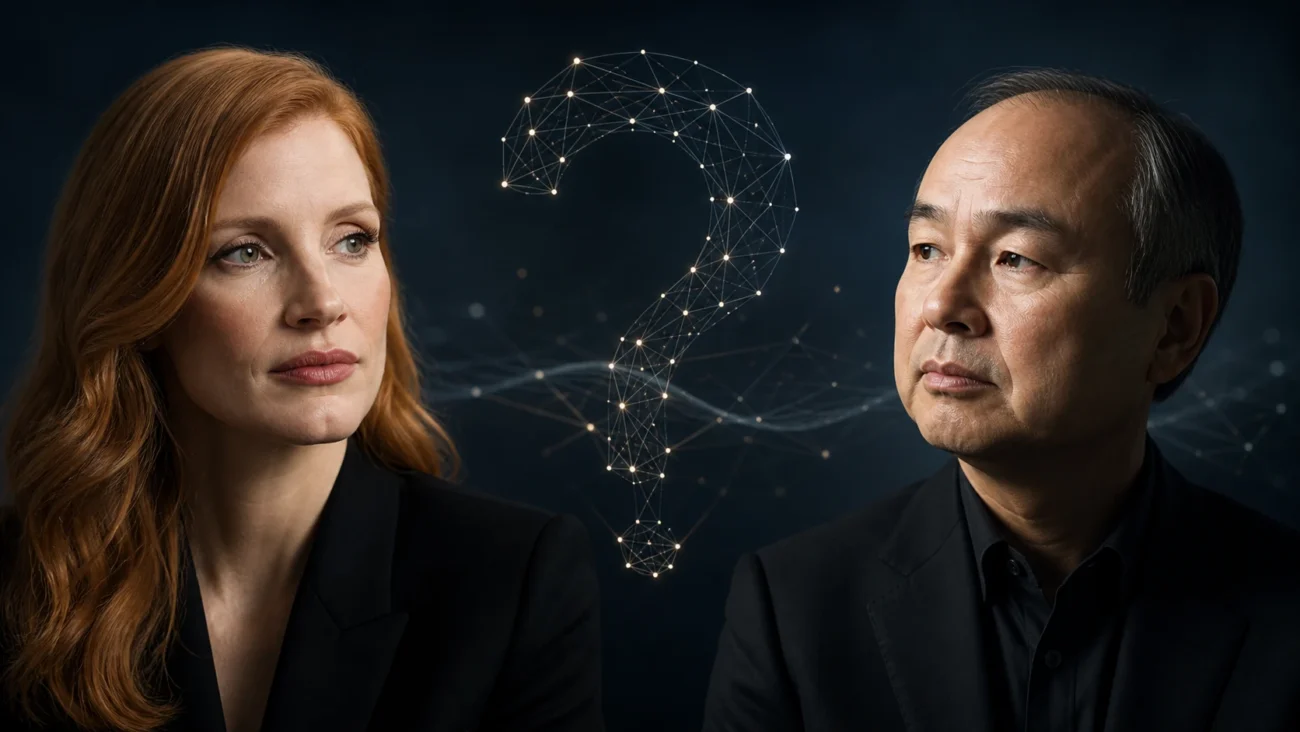
No verified public connection has been found between Jessica Chastain and Masayoshi Son. The two names belong to prominent figures in very different fields: Chastain is an Academy Award-winning American actor and producer, while Son is the founder, chairman and CEO of SoftBank Group, one of Japan’s most influential technology and investment companies.
Public records reviewed through August 20, 2026, do not establish that Chastain and Son are relatives, business partners, collaborators, or participants in a shared film, investment, charitable project, or corporate venture. That does not prove they have never met or known one another privately; it means there is no substantiated public relationship to report.
The unusual pairing of their names has nevertheless circulated online. The origin of that search association remains unclear, and recent pages repeating the pairing have not produced an original document, announcement, interview, transaction, or credit linking them. The more useful way to understand the query is therefore to look at who each person is, how each built a public career, and what each is doing now.
Are Jessica Chastain and Masayoshi Son Connected?
There is no verified public evidence of a substantive connection between Jessica Chastain and Masayoshi Son as of August 20, 2026.
Chastain’s documented professional world centers on film, television, theater and producing through Freckle Films. Son’s public work centers on SoftBank Group, technology investments, telecommunications, Arm, artificial intelligence and large-scale financing projects.
No authoritative film credit, SoftBank disclosure, investment announcement, interview or public partnership reviewed in the available record names them together. There is also no verified public disclosure showing that SoftBank invested in Chastain’s production company.
The careful formulation matters. It would be too strong to say the two have “never met” or have “no connection whatsoever,” because private acquaintance cannot be disproved from public records. What can be said is that no verified public connection has been found.
Jessica Chastain: Early Life and Training
Jessica Chastain was born on March 24, 1977, in Sacramento, California. Before becoming widely known as a film actor, she studied at Sacramento City College and later trained at the Juilliard School in New York.
Chastain has spoken publicly about the importance of financial assistance during her training. She has said that a scholarship funded by Robin Williams helped make it possible for her to complete her education at Juilliard, where she graduated in 2003.
Her career did not begin with immediate movie stardom. She worked in television and theater before building a substantial film career, developing the classical training and stage experience that would later become part of her reputation as an actor able to move between commercial productions, historical dramas and demanding character studies.
Breakthrough and Major Film Work
The year 2011 marked Chastain’s major film breakthrough. She appeared in six feature films that year, including The Tree of Life, Take Shelter and The Help.
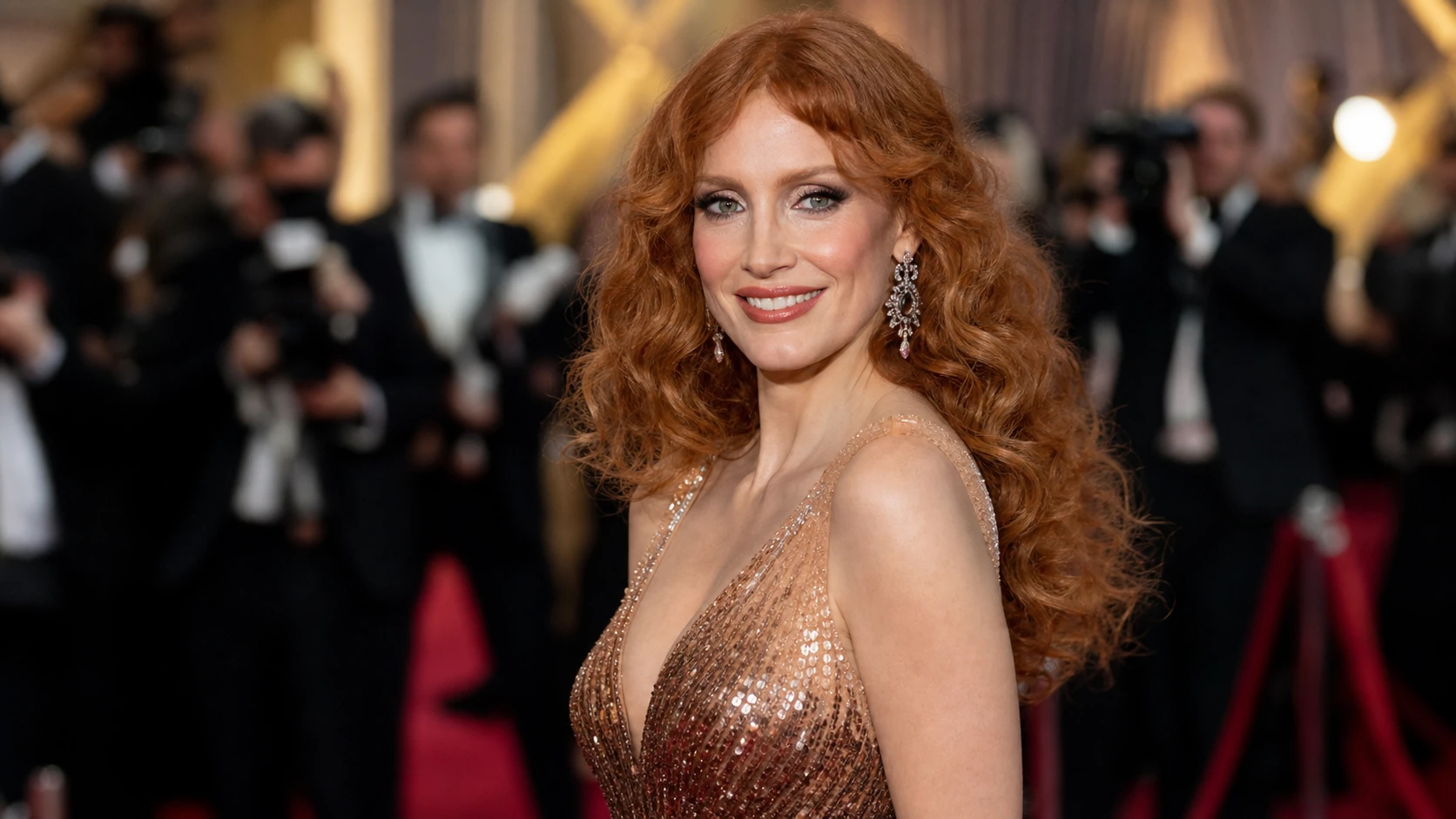
The Help brought her widespread recognition and an Academy Award nomination for Best Supporting Actress. The following year, her portrayal of a CIA analyst pursuing Osama bin Laden in Kathryn Bigelow’s Zero Dark Thirty established her more firmly as a leading actor. She received an Academy Award nomination for Best Actress and won the Golden Globe for Actress in a Motion Picture — Drama in January 2013.
Chastain continued to alternate between major studio projects and character-centered dramas. Her credits have included Christopher Nolan’s Interstellar, among other high-profile films, but one of the defining roles of her career came with The Eyes of Tammy Faye.
Playing televangelist Tammy Faye Bakker required Chastain to carry a biographical drama built heavily around physical transformation and performance. At the 2022 Academy Awards, she won Best Actress for the role.
That Oscar represented the culmination of a decade in which she had moved from a relatively late film breakthrough into the top tier of American screen actors.
Television, Theater and Producing
Chastain’s work has not been limited to feature films.
Her portrayal of country singer Tammy Wynette in the limited series George & Tammy earned her a 2023 Emmy nomination for Outstanding Lead Actress in a Limited or Anthology Series or Movie. The role extended the pattern established by The Eyes of Tammy Faye: taking on a widely known real person while avoiding a career confined to conventional biographical films.
She also returned prominently to the stage in the Broadway production of A Doll’s House. Her performance earned a 2023 Tony Award nomination for Best Actress in a Leading Role in a Play. The production received six Tony nominations overall.
Alongside acting, Chastain has expanded her role as a producer through Freckle Films. That work has given her greater involvement in developing and shaping projects rather than appearing only as a performer.
Her career was formally recognized on September 4, 2025, when she received the 2,819th star on the Hollywood Walk of Fame in the Motion Pictures category.
What Jessica Chastain Is Working on in 2026
Chastain remains active as both an actor and producer.
She stars in and executive-produces Apple’s The Savant through Freckle Films. Apple had previously announced a September 26, 2025 premiere, but that date is no longer current. As of August 20, 2026, Apple’s official page lists the project as “Coming Soon” without a firm premiere date.
That distinction is important because older announcements can easily be mistaken for current scheduling information.
Chastain is also set to appear in Other Mommy, a Universal Pictures and Blumhouse production in which she plays a dual role. As of August 20, 2026, the film is scheduled for theatrical release on October 9, 2026. As with any future release date, that schedule could still change.
Her current work reflects the broader shape of her career: major acting assignments combined with increasing involvement behind the camera.
Masayoshi Son: Education and the Founding of SoftBank
Masayoshi Son was born on August 11, 1957. He studied economics at the University of California, Berkeley, graduating in 1980.
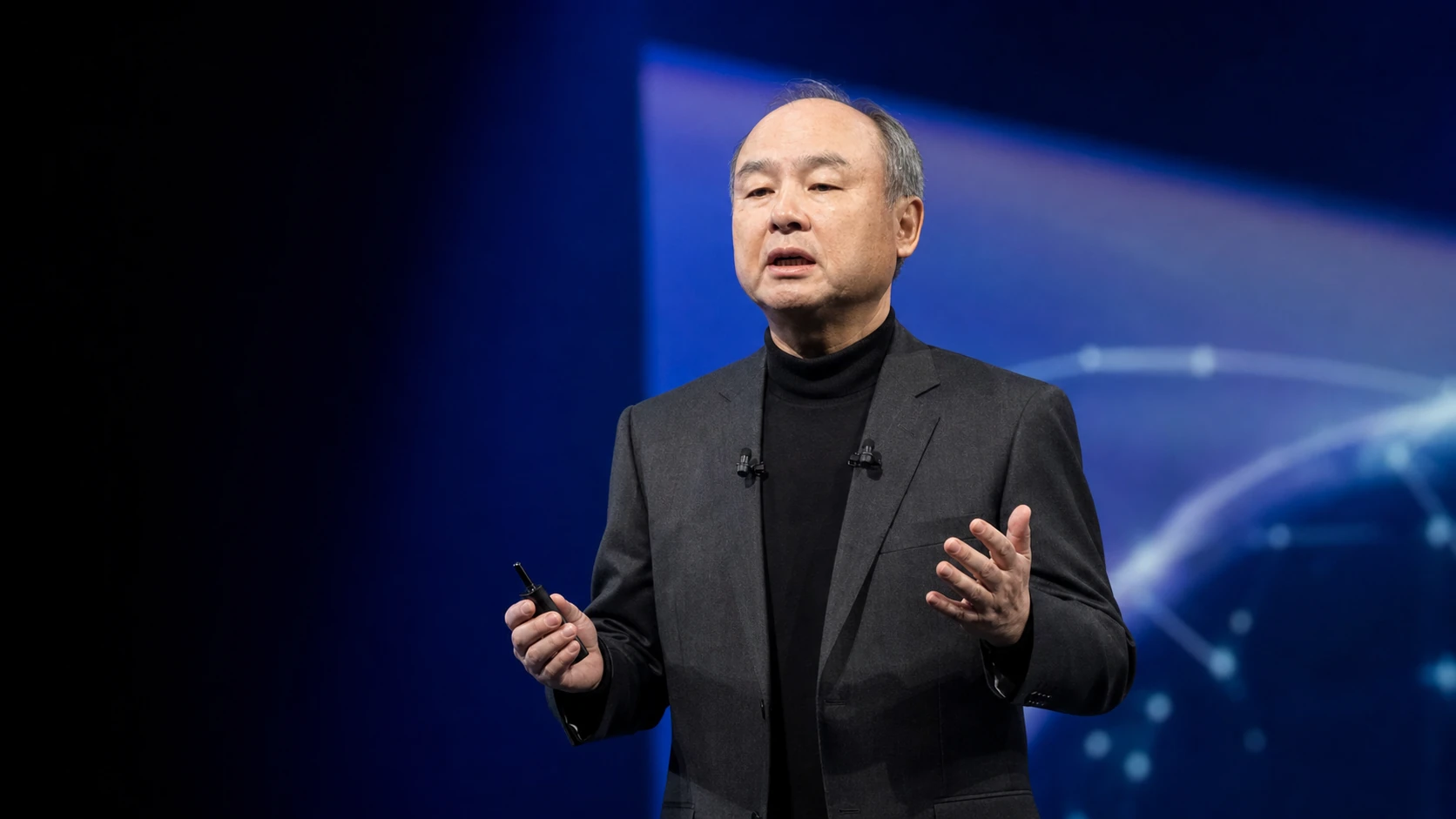
In September 1981, he founded Nihon SoftBank, the company that eventually became SoftBank Group Corp. What began as a technology-related business developed over subsequent decades into a sprawling corporate and investment group with interests in telecommunications, semiconductor technology, internet companies and venture investing.
Son’s career has been defined less by operating one stable line of business than by repeatedly making large bets on technological shifts. That strategy has produced some extraordinary successes as well as highly visible losses.
Building SoftBank Through Telecommunications and Technology
One of the most consequential turning points came in 2006, when SoftBank acquired Vodafone K.K., Vodafone’s Japanese mobile business.
The agreed equity value was ¥1.75 trillion. The transaction gave SoftBank a major position in Japanese mobile telecommunications and helped transform the group into a much larger consumer technology company.
A decade later, SoftBank made another defining acquisition. In 2016 it agreed to buy British semiconductor-design company Arm for approximately £24 billion, equivalent to about $31 billion at the exchange rate cited in SoftBank’s announcement. The acquisition was completed in September that year.
Arm became increasingly important as computing shifted toward mobile devices, cloud infrastructure and artificial intelligence. Son has repeatedly positioned semiconductor technology as central to his long-term view of computing.
Alibaba and the Vision Fund
Among Son’s most celebrated investments was SoftBank’s early backing of Alibaba.
SoftBank has reported that it invested a total of ¥7.4 billion in Alibaba and generated a total return of ¥9.7 trillion over roughly 23 years. The company calculated an internal rate of return of 57 percent, subject to its stated assumptions and before certain tax considerations.
Those figures should be understood as SoftBank’s own reported calculations rather than as a simple independent measure of “profit.” Even so, the Alibaba investment became one of the transactions most closely associated with Son’s reputation for making unusually large, long-term technology bets.
In 2017, SoftBank expanded that approach through the SoftBank Vision Fund. Its first major closing reached $93.2 billion in committed capital, creating an investment vehicle of unprecedented scale for the technology sector at the time.
The fund backed a wide range of companies, but its record was uneven. Son’s career cannot accurately be described as a continuous sequence of successful bets. SoftBank also suffered major setbacks, with WeWork becoming the most widely cited example of an investment that damaged the group financially and raised questions about valuation, governance and investment discipline.
That mixed record is essential context. Son’s willingness to commit enormous sums has produced both exceptional returns and exceptional risks.
The Shift Toward Artificial Intelligence
By 2025 and 2026, artificial intelligence had become the dominant theme in Son’s public strategy.
SoftBank and OpenAI announced plans in 2025 for a Japanese enterprise-AI partnership and the creation of SB OpenAI Japan. Son has also described a larger ambition for SoftBank to become a leading platform provider in what he calls “artificial superintelligence,” or ASI.
ASI is a forward-looking concept referring to systems that would substantially surpass human intellectual capabilities across a broad range of tasks. Son’s statements about it are strategic predictions and aspirations, not established outcomes.
His commitment to the sector is nevertheless backed by extremely large financial plans.
In February 2026, SoftBank agreed to make a further $30 billion investment in OpenAI. SoftBank said that, once the announced investment was completed, its cumulative investment was expected to reach $64.6 billion and represent approximately 13 percent ownership.
The investment was structured in stages. SoftBank executed a second $10 billion tranche on July 1, 2026, while another $10 billion tranche was scheduled for October 1 subject to the specified closing conditions. The projected cumulative figure therefore should not be described as fully completed while the remaining investment is still conditional.
Son and the Stargate Project
Son is also closely involved in Stargate, an ambitious U.S. artificial-intelligence infrastructure initiative announced in January 2025.
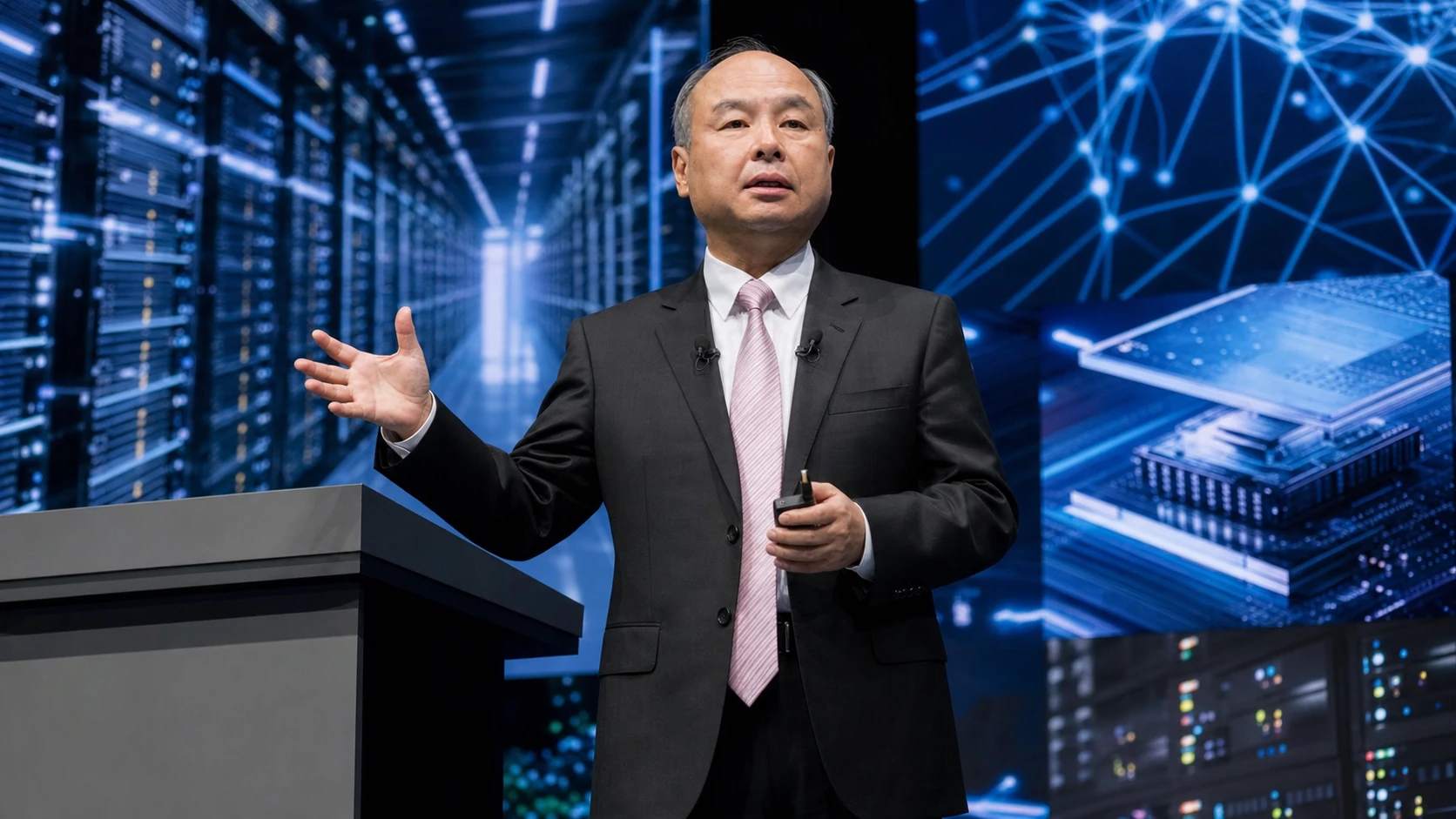
SoftBank and OpenAI were named as lead partners. The announcement said Stargate intended to invest $500 billion over four years in AI infrastructure in the United States, beginning with $100 billion. SoftBank was assigned financial responsibility, while OpenAI was assigned operational responsibility, and Son was named chairman.
The wording of that announcement is important. The $500 billion figure represents an intended multiyear investment plan, not money that had already been spent when the project was announced.
Stargate, SoftBank’s OpenAI investments and the group’s increasing focus on Arm all point in the same direction: Son is attempting to position SoftBank around the infrastructure, capital and computing power required for large-scale artificial intelligence.
Whether that strategy ultimately produces results on the scale Son predicts remains uncertain. His history offers reasons for both confidence and caution: an extraordinary early investment in Alibaba sits in the same career as costly failed bets.
Son’s Current Role
As of June 24, 2026, SoftBank Group lists Masayoshi Son as Representative Director, Corporate Officer, Chairman and CEO.
More than four decades after founding SoftBank’s predecessor, he remains closely associated with the company’s strategic direction rather than serving as a ceremonial founder.
His current public agenda is markedly focused on artificial intelligence. SoftBank’s corporate messaging in 2026 presents AI and the pursuit of an ASI-related platform strategy as central to the group’s future.
Those ambitions are still developing, and many of the largest numbers attached to them concern planned investment rather than completed results. For that reason, Son’s present strategy is best described in terms of commitments, announced transactions and stated goals rather than guaranteed outcomes.
Why Are Jessica Chastain and Masayoshi Son Being Searched Together?
The exact reason the names Jessica Chastain and Masayoshi Son have become paired in some online searches is not publicly established.
A cluster of recent pages has repeated the combination, but repetition does not create evidence of an underlying relationship. None of the material examined for this profile provided an original event, transaction, production credit, interview or corporate announcement linking the two.
That makes the search pairing itself a useful example of why unusual name combinations require verification. Search visibility can arise without a documented relationship between the people involved.
For readers looking for a simple answer: Chastain and Son are notable public figures with separate careers, and no verified public record reviewed through August 20, 2026 establishes a substantive connection between them.
Conclusion
Jessica Chastain and Masayoshi Son occupy very different parts of contemporary public life. Chastain built her career through theater training, acclaimed film performances, television work and an expanding role as a producer, culminating in an Academy Award and continued major projects in 2026. Son built SoftBank from a company founded in 1981 into a global technology and investment group, with a career defined by large acquisitions, extraordinary investment wins, costly failures and an increasingly aggressive commitment to artificial intelligence.
Their names may now appear together online, but the reliable public record does not support turning that coincidence into a relationship. As of August 20, 2026, the evidence supports two distinct biographies—and no verified substantive connection between them.
