
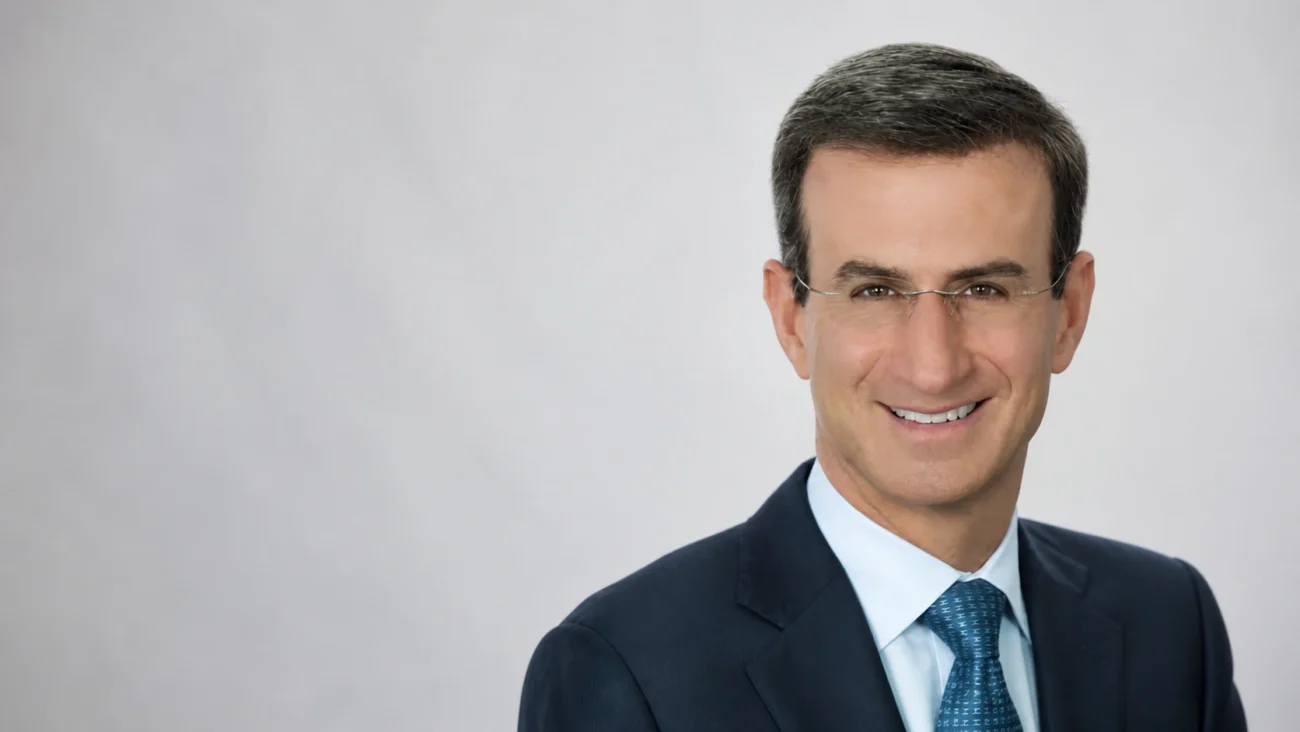
No reliable public evidence confirms that Peter Orszag wears a wig, toupee, or hairpiece. The question has circulated for years, but the strongest historical material is still speculative. A frequently cited 2010 article in Observer quoted hairpiece specialist Joseph Paris, yet the same report made clear that Paris had not examined or measured Orszag and was commenting after looking at photographs. That is not enough to establish what kind of hair Orszag has.
The speculation is nevertheless part of Orszag’s public-media history. It was circulating by January 2010, when he was serving as director of the White House Office of Management and Budget. More than 16 years later, the rumor persists online even though the underlying evidence has not become stronger.
Beyond that curiosity, Peter R. Orszag is an economist and former senior U.S. budget official who went on to a major career in finance. As of August 28, 2026, he is CEO and Chairman of Lazard, after earlier leading the Congressional Budget Office and the Office of Management and Budget.
Need to know
- No reliable public source examined through August 28, 2026 confirms that Peter Orszag wears a wig or toupee.
- A hairpiece specialist cited in 2010 had not personally examined Orszag and was offering an opinion based on photographs.
- The toupee speculation was circulating publicly by January 2010, but its exact origin has not been established.
- Orszag is a former director of both the Congressional Budget Office and the White House Office of Management and Budget.
- He is now CEO and Chairman of Lazard, having become CEO in October 2023 and Chairman in January 2025.
Peter Orszag profile summary
| Profile detail | Verified information |
|---|---|
| Full name | Peter Richard Orszag |
| Current role | CEO and Chairman of Lazard |
| Lazard CEO since | October 1, 2023 |
| Lazard Chairman since | January 1, 2025 |
| Joined Lazard | May 2016 |
| Former government roles | Director of the Congressional Budget Office; Director of the Office of Management and Budget |
| Education | Princeton University; Ph.D. from the London School of Economics |
| Notable recent honor | Citizens Budget Commission Medal for High Civic Service, 2026 |
Does Peter Orszag wear a wig?
There is no verified public answer establishing that he does.
The most careful way to describe the record is that Peter Orszag’s wig or toupee use has not been publicly confirmed. That wording matters because two opposite claims would both go beyond the evidence: saying that he definitely wears a hairpiece would be unsupported, but saying that his hair is definitively natural would also be unsupported.
The most frequently cited historical piece is a January 26, 2010 Observer profile of hairpiece specialist Joseph Paris. The article discussed Orszag’s appearance and quoted Paris after showing him photographs. Crucially, however, the Observer article said Paris had not measured Orszag.
That makes his comments an appearance-based assessment, not firsthand verification. Paris had not treated Orszag, examined his hair in person, or otherwise established whether he used a hairpiece.
Photographs cannot fill that evidentiary gap. Lighting, styling, image compression, camera angle and the way hair moves in a single frame can all affect appearance. They do not reliably establish whether someone wears a wig, has undergone a cosmetic procedure or has a particular medical condition.
Where the toupee rumor came from
The exact origin of the speculation is uncertain, but it was clearly in circulation by January 2010.
On January 11, 2010, Power Line published a short post asserting that Orszag wore a toupee. The claim was presented without firsthand evidence. The next day, Gawker published a deliberately speculative photo-comparison piece asking whether Orszag’s hair was really a toupee. The archived Gawker article shows that the subject had already become a minor media curiosity.
On January 14, a Los Angeles Times column also referenced the toupee question. Then, on January 26, Observer published the Joseph Paris piece that became one of the rumor’s most durable sources.
Those articles are useful for establishing that the speculation existed. They are much weaker as evidence that the speculation was true.
There is also a chronology problem in some later retellings. Gawker discussed a photograph dated November 25, 2008, but that does not show that the wig rumor itself was published in 2008. The safest conclusion is simply that the speculation was publicly circulating by January 2010.
No reliable direct statement from Orszag confirming or denying the claim was located in the documented research. That should not be turned into the broader assertion that he has never addressed it.
What the 2010 hairpiece expert actually established
The Joseph Paris story is worth examining because later retellings can make it sound more definitive than it was.
Paris was an experienced professional in the hairpiece business. His professional background gave him knowledge of how hair systems can be constructed and attached. But expertise alone does not create firsthand evidence about a particular person.
In this case, Observer made clear that he had not personally measured Orszag. His opinion was based on images he had been shown. The article included speculation about how a hair system might be attached, but that remained an interpretation from photographs.
The distinction is simple: a specialist can explain what something in a photograph resembles without establishing what is actually present.
For that reason, claims that a “toupee expert confirmed” Orszag wears a wig overstate the original article. The historical record supports a narrower statement: a hairpiece professional speculated from photographs in 2010, without examining Orszag himself.
Education and early policy work
Peter Richard Orszag studied at Princeton University, where Lazard says he graduated summa cum laude. Princeton Alumni Weekly identifies him as a member of the class of 1991.
He later studied at the London School of Economics as a Marshall Scholar. LSE’s thesis repository records his 1997 doctoral dissertation, Dynamic analysis of regime shifts under uncertainty: Applications to hyperinflation and privatization.
Two Princeton economists, Alan Blinder and Alan Krueger, were among the mentors Orszag later identified as important influences. That background placed him within a generation of economists whose work moved readily between academic research and public policy.
By the mid-2000s, Orszag had become prominent in Washington economic-policy circles. In April 2006, Brookings launched the Hamilton Project with Orszag as project director and a senior fellow. Brookings’ launch announcement described a program focused on economic growth and opportunity through evidence-based policy proposals.
That role helped set up the next phase of his career: leading two of the federal government’s most important budget institutions.
From the Congressional Budget Office to the White House
Orszag served as director of the Congressional Budget Office from January 18, 2007, to November 25, 2008, according to the CBO’s institutional history.
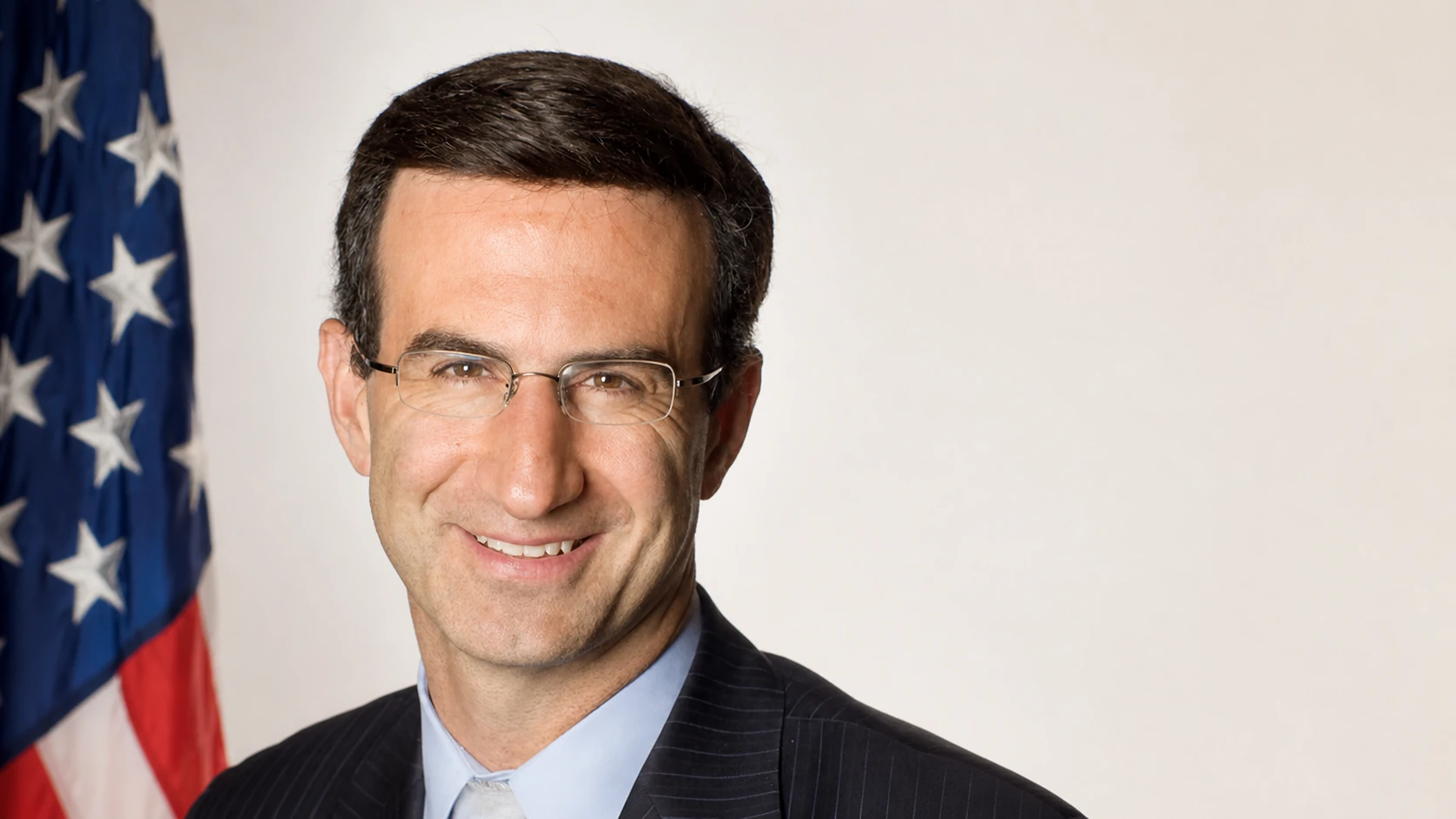
The CBO provides Congress with nonpartisan budget and economic analysis, so its director occupies an influential position in debates over federal spending, taxation, deficits and the long-term fiscal outlook.
After Barack Obama won the 2008 presidential election, Orszag moved into the executive branch. He served as director of the Office of Management and Budget from January 20, 2009, to July 30, 2010.
The timing placed him near the center of economic policymaking during the aftermath of the global financial crisis. His OMB period included work connected to the American Recovery and Reinvestment Act, health-care reform, federal budgets and longer-term fiscal sustainability.
In a 2009 Princeton Alumni Weekly interview, Orszag described health-care costs as especially consequential because their rapid growth threatened to squeeze out other public priorities. He also spoke about the personal weight of accepting the OMB job, saying he had hesitated because of its effect on his family before concluding that “when the president asks you to serve, it’s hard to say no.”
The quotation captures a documented turning point without requiring speculation about his private motives. His move to OMB was both a major career transition and an entry into one of the Obama administration’s most demanding economic-policy posts.
When he left the White House in 2010, Orszag’s own departure note emphasized the Recovery Act, health reform, federal budgets and efforts to confront the country’s long-term fiscal challenges.
The move from public policy to Wall Street
After government service, Orszag shifted into senior roles in finance.
From January 2011 to February 2016, he worked at Citigroup, where he served as vice chairman of corporate and investment banking and chaired its Financial Strategy and Solutions Group, according to Lazard’s regulatory disclosures.
He joined Lazard in May 2016, initially as vice chairman of investment banking. In June 2019, he became CEO of Lazard’s Financial Advisory business.
That progression culminated in his appointment as chief executive of the overall firm. Lazard announced in 2023 that Orszag would become CEO effective October 1, 2023. He then became Chairman of the board effective January 1, 2025.
Lazard’s current biography of Peter Orszag identifies him as CEO and Chairman and summarizes the unusual breadth of his career across economic research, government budget leadership and investment banking.
What Peter Orszag is known for
Orszag’s public career has been shaped less by a single signature publication or transaction than by a recurring set of economic-policy concerns.

One is long-term fiscal policy: how governments manage spending, taxation, deficits and the financial pressures created by demographic and economic change.
Another is health-care economics. During his CBO and OMB years, he repeatedly emphasized the importance of slowing the growth of health-care costs, not simply because of the health system itself but because those costs affect the wider federal budget.
His work with the Hamilton Project also reflected an interest in policy design intended to support economic growth while addressing structural problems in the economy.
Those themes continued after his move into finance, although in a different institutional setting. At Citigroup and Lazard, his roles shifted from public budgeting toward corporate strategy, investment banking and financial advisory work.
The through-line is a career built around large institutional economic decisions: first in research and government, then in global finance.
What is Peter Orszag doing now?
As of August 28, 2026, Peter Orszag is CEO and Chairman of Lazard.
His current leadership is tied to the firm’s “Lazard 2030” strategy, which Lazard describes in terms of increasing relevance, revenue and returns while expanding the use of technology, including artificial intelligence, across the business.
In July 2026, Lazard reported second-quarter net revenue of $808 million and first-half net revenue of $1.564 billion. Those are company-reported figures, not an independent assessment of Orszag’s individual performance. Lazard’s July 2026 results linked the period to progress on the firm’s longer-term strategic objectives.
Earlier in 2026, Orszag received the Citizens Budget Commission Medal for High Civic Service, reflecting continued recognition of his public-policy career even as his current work is centered in finance.
That combination makes his career unusual: he has led federal budget institutions, worked inside a presidential administration, held senior positions at major financial firms and ultimately become chief executive and chairman of Lazard.
Frequently asked questions
Has Peter Orszag confirmed that he wears a toupee?
No reliable direct confirmation was identified in the documented public record. The historical stories about a toupee were based mainly on visual speculation rather than firsthand evidence.
Did a hairpiece expert prove that Orszag wears a wig?
No. A hairpiece specialist quoted by Observer in 2010 commented after looking at photographs, but the article explicitly said he had not measured Orszag. His opinion therefore did not constitute proof.
Has Peter Orszag confirmed a hair transplant?
No reliable public confirmation of a hair transplant or other hair-restoration treatment was found. Claims about such procedures should not be inferred from photographs.
What does Peter Orszag do now?
As of August 28, 2026, he is CEO and Chairman of Lazard. He became CEO in October 2023 and Chairman in January 2025.
Conclusion
The enduring “Peter Orszag wig” question has a much firmer history as a media rumor than as an established fact. The speculation can be traced through several January 2010 articles, but the most frequently cited specialist had not examined Orszag and was commenting from photographs. No reliable public confirmation has since turned that speculation into verified fact.
Orszag’s documented public story is more substantial: an economist shaped by academic and policy work, a former leader of both the CBO and OMB, a senior figure at Citigroup and, as of August 2026, the CEO and Chairman of Lazard. That record is verifiable. The status of his hair is not.
